Master’s Degree (MOT)
Hands-On Lab Training
Clinical Hours Provided
Job Placement Assistance*96 Approved Instructional Weeks
I am honored to welcome you on your journey into one of the most rewarding and impactful professions in healthcare!
Occupational therapy is built on a powerful belief: participation in meaningful occupations and activities has the ability to transform lives. As an occupational therapy practitioner, you will have the privilege of helping individuals of all ages in the activities that bring purpose, independence, health and fulfillment to their daily lives. Whether you are supporting a child learning through play, an adult returning to work, or an older adult maintaining independence, you will become an essential partner in helping people do the things they want and need to do.
Our MOT Program is committed to preparing competent, confident, and compassionate practitioners through a dynamic, hands-on curriculum. The program is HYBRID so you have the best of both worlds — flexibility in your learning, and on-campus touch points to reinforce real-world practice. You will develop the clinical reasoning and professional skills that prepare you to serve diverse populations and meet the evolving needs of our communities and healthcare workforce.
At Gurnick, we believe that excellent practitioners are lifelong learners, servant leaders, and advocates for meaningful participation in LIFE. We are dedicated to creating a supportive learning environment that challenges you to grow professionally while remaining grounded in the values of compassion, collaboration, and occupation-centered practice.
We are excited to partner with you as you prepare for a career that empowers others, strengthens communities, and transforms lives through occupation. The future of occupational therapy needs skilled and passionate practitioners, and we look forward to helping you become one of them.
Welcome to the profession of occupational therapy. Welcome to the Gurnick MOT family.
Program Mission
The MOT program’s mission was developed to be in congruency and supportive of Gurnick Academy of Medical Arts. Our program will help the institution achieve its mission by educating occupational therapy students who integrate professional skills, involvement in urban and rural community service, and the use of occupations as the cornerstone of our services, while achieving the goals developed with the client, thus being empowered to fulfill their own professional goals.


The Master in Occupational Therapy (MOT) program uses meaningful and purposeful activities and occupations to promote health, independence, learning, and well-being across the life span, with people of all ages from newborns to the elderly.
Occupational therapists evaluate and provide therapeutic interventions to individuals, families, groups, and communities to facilitate health, well-being, and learning through engagement in meaningful activities and occupations.
In addition to direct patient care, occupational therapists participate in addressing the factors that affect the delivery of health services and the disparities that contribute to occupational deprivation
The program will offer a sequential, integrated curriculum that reflects contemporary Occupational Therapy practice.
The program will prepare graduates to provide occupational therapy services such as evaluation, assessments, and interventions in various settings within the occupational therapist’s scope of practice.
The program will prepare graduates to demonstrate ethical and professional behaviors consistent with California State Law and Practice Acts and the professional standards of practice.
The program will employ faculty who demonstrate current knowledge in their teaching areas and are committed to professional standards of excellence.
The program will prepare graduates to utilize self-assessment and awareness in communication, skills, knowledge, and behaviors with patients/clients, caregivers, colleagues, and other healthcare team members.
The program will provide students with a curriculum that recognizes, fosters understanding, and embraces diversity and different learning styles.
Occupational therapy students are adult learners, and our program will provide the opportunity to take responsibility for learning, professional behavior, respect for others, and preparedness.
Gurnick Academy of Medical Arts does not discriminate against students based on race, color, creed, national origin, gender, sexual orientation, age, disability, or marital status.
Gurnick Academy of Medical Arts considers clinical experience one of the most vital parts of healthcare education. While attending the Master in Occupational Therapy program, clinical/practicum hours are completed at an assigned clinical site(s).
At the same time, the lectures are held through synchronous (students and faculty meeting online) distance education format, and the labs are held on campus.
*96 Approved Instructional Weeks
The program information, length, and schedule may change. Please read the accompanying Addendum for changes and updates, and check with an admissions advisor for details. Enrollment is available only to students who live in California.
The Master in Occupational Therapy Program has a library and classrooms equipped with modern audio-visual teaching aids, textbooks, journals, anatomical charts, and models, in addition to e-library resources.
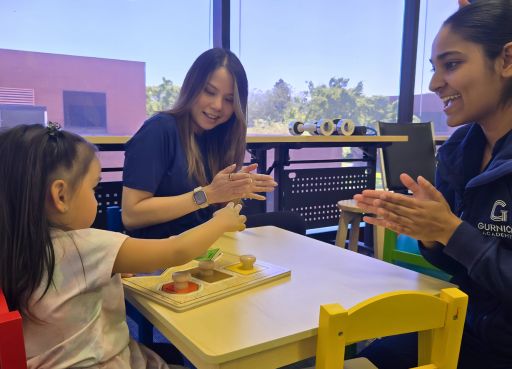
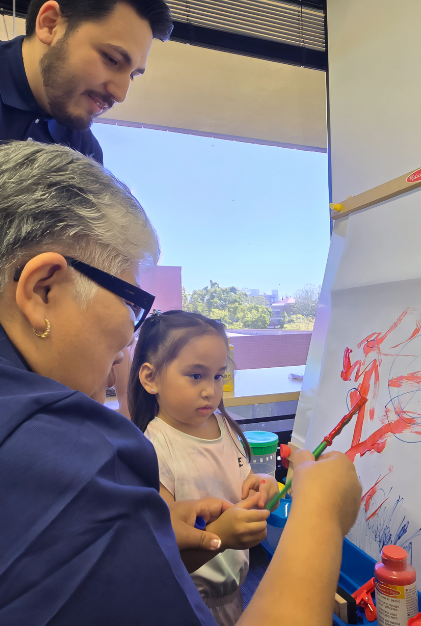
The laboratories are equipped with the most actualized tools and materials used in the occupational therapy practice. We have a pediatric laboratory with equipment for working with children and youth with developmental, musculoskeletal, and neurological issues, as well as learning issues. The lab will also be used as our sensory integration lab. Our daily living lab takes place in a room that has been developed and outfitted as a living quarter, with a kitchen, bathroom, and living room.
We also have a very spacious lab for all the physical disabilities and biomechanical techniques, a hand therapy lab, and an ergonomics lab. The instructor-to-student ratio is 1:26 in lecture and 1:12 in laboratory.
The program consists of eight (8) quarters, each twelve (12) weeks long.
Quarters 1-6 consist of virtual synchronous didactic sessions and in situ lab sessions, which include three (3) to five (5) days per week of up to four (4) hours per day, didactic, and the lab instruction will take place four times per quarter on Saturdays and/or Sundays. Starting in quarter two, externships or Fieldwork one (FWI) will begin; the FWI entails 40 hours distributed throughout the quarter. Quarters three, four, and five will each have a 40-hour FWI. Quarters seven and eight will have a Full Time (480 hours per quarter) Fieldwork II for a total of 960 hours.
The student receives nine hundred thirty-five (935) didactic and laboratory instruction and one thousand one hundred and twenty (1,120) hours of clinical education, allowing them to apply the lecture topics to practical use. The curriculum provides students with the technical, clinical, and interpersonal skills necessary to succeed in this field. In addition, the program prepares students to take their NBCOT Certification exam.
Upon completion of the program, a Master in Occupational Therapy degree is awarded. Normal completion time for this program is ninety-six (96) weeks, excluding any holidays and vacation times. To ensure program completion is on time and the required program hours are fulfilled, class times may be rescheduled to an alternate day of the week (i.e., Sunday through Saturday).
Please review the following requirements: General Admission Requirements for all programs.
The Master in Occupational Therapy Program has a selective application process. There is a deadline for the submission of completed applications. Please inquire with Admissions about the current deadline date.
Please review the following requirements: General Performance Requirements for all programs.
Each program has specific physical and non-physical requirements for students to ensure student and patient safety and welfare. (Check with an admission advisor if applicable.)
Critical Thinking–calculation, problem-solving, reasoning, and judgment
Interpersonal and Behavioral–working with others, resolving conflicts, offering support
Communication skills–verbal, non-verbal, and written
Motor Skills–gross motor, fine motor, coordination
Sensory Skills–visual, auditory, tactile
The following requirements must be met for a student to graduate from the Master in Occupational Therapy program at Gurnick Academy of Medical Arts:
Please review the following requirements: General Admission Requirements for all programs.
The Master in Occupational Therapy Program has a selective application process. There is a deadline for the submission of completed applications. Please inquire with Admissions about the current deadline date.
Please review the following requirements: General Performance Requirements for all programs.
Each program has specific physical and non-physical requirements for students to ensure student and patient safety and welfare. (Check with an admission advisor if applicable.)
Critical Thinking–calculation, problem-solving, reasoning, and judgment
Interpersonal and Behavioral–working with others, resolving conflicts, offering support
Communication skills–verbal, non-verbal, and written
Motor Skills–gross motor, fine motor, coordination
Sensory Skills–visual, auditory, tactile
The following requirements must be met for a student to graduate from the Master in Occupational Therapy program at Gurnick Academy of Medical Arts:
Please review the MOT Admission Point System table to help you prepare. Applicants not selected may reapply. The following point system evaluates and ranks each applicant, showing the maximum score achievable.
MOT Prerequisite Requirements
Prerequisite college-level coursework or an approved equivalent must be completed for a grade. AP credits are accepted for all prerequisites. Preference will be given to applicants who have letter grades for courses and prerequisites. Prerequisites older than 6 years will not be accepted unless the course is part of the degree major. Exceptions may be considered on a case-by-case basis.
| MOT Prerequisite Course | Minimum Credit Hours |
|---|---|
| Human Anatomy with Lab | 4 Semester / 6 Quarter Hours |
| Human Physiology with Lab | 4 Semester / 6 Quarter Hours |
| Statistics | 3 Semester / 4.5 Quarter Hours |
| Lifespan Human Development | 3 Semester / 4.5 Quarter Hours |
| Abnormal Psychology | 3 Semester / 4.5 Quarter Hours |
| Sociology or Cultural Anthropology | 3 Semester / 4.5 Quarter Hours |
| English | 3 Semester / 4.5 Quarter Hours |
| Medical Terminology | 1 Semester / 1.5 Quarter Hours |
MOT Admission Points System
Please review the MOT Admission Point System table to help you prepare. Applicants not selected may reapply. The following point system evaluates and ranks each applicant, indicating the maximum achievable score.
| Point Category | Points Possible |
|---|---|
| Interview Points | 50 |
| Total Points Possible | 50 |
The table below reflects the upcoming future starts only.
| MASTER IN OCCUPATIONAL THERAPY PROGRAM TUITION & FEES | COST |
|---|---|
| Student Tuition Recovery Fund (Non-Refundable) | $0.00 |
| Registration Fee (Non-Refundable) | $100.00 |
| Books (Non-Refundable, if accessed) | $575.00 |
| Tuition Fee | $100,005.00 |
| TOTAL PROGRAM COST | $100,680.00 |
*Program fees are subject to change.
| Course Number | Title | Clock Hours | Quarter Credit Hours |
|---|---|---|---|
| MOT 100 | Occupational Therapy Foundations | 75.0 | 6.0 |
| MOT 110 | Clinical Neuroscience | 45.0 | 4.5 |
| MOT 120 | Kinesiology and Occupational Performance | 45.0 | 3.0 |
| MOT 200 | Mental Health and Occupational Performance | 120.0 | 9.0 |
| MOT 210 | Fieldwork Level I: Mental Health and Occupational Performance | 40.0 | 1.0 |
| MOT 220 | Health Care Management in Occupational Therapy | 45.0 | 4.5 |
| MOT 300 | Occupational Performance in Pediatrics | 120.0 | 9.0 |
| MOT 310 | Fieldwork Level I: Occupational Performance in Pediatrics | 40.0 | 1.0 |
| MOT 320 | Assistive Technology in Occupational Therapy Services | 45.0 | 3.0 |
| MOT 400 | Occupational Performance in Adults | 120.0 | 9.0 |
| MOT 410 | Fieldwork Level I: Occupational Performance in Adults | 40.0 | 1.0 |
| MOT 420 | Occupational Therapy Scholarship I | 30.0 | 3.0 |
| MOT 500 | Occupational Performance in the Older Adult | 120.0 | 9.0 |
| MOT 510 | Fieldwork Level I: Occupational Performance in the Older Adult | 40.0 | 1.0 |
| MOT 520 | Occupational Therapy Scholarship II | 30 | 3.0 |
| MOT 600 | Leadership in Occupational Therapy | 60.0 | 6.0 |
| MOT 610 | Therapeutic Reasoning and Reflective Practice in Occupational Therapy | 50.0 | 5.0 |
| MOT 620 | Occupational Therapy Scholarship III | 30.0 | 3.0 |
| MOT 700 | MOT Fieldwork IIA: Pediatrics | 480.0 | 16.0 |
| MOT 800 | MOT Fieldwork IIB: Adults | 480.0 | 16.0 |
| TOTAL | 2,055.0 | 113.0 | |
Read the Master in Occupational Therapy Course Descriptions.
Credit Granting Policy
Credits earned from courses or programs accredited by an agency recognized by the United States Department of Education (U.S. DoE) or the Council for Higher Education Accreditation (CHEA):
Master in Occupational Therapy Program (MOT)
Credits earned from courses or programs approved by:
Gurnick Academy of Medical Arts considers clinical experience one of the most vital parts of medical education. Students must be rotated throughout our affiliated medical facilities while attending the Master in Occupational Therapy school.
View the O*Net Online 29-1122.00 Occupational Therapists job profile for general information about the profession. Find information about salary data for the following states and major cities near areas where clinical training for the program is conducted.
State Authorization
Gurnick Academy of Medical Arts provides information on whether its programs meet educational requirements for professional licensure or certification in each state. Students are encouraged to review the Curriculum and Licensure Requirements by State available on the Academy’s website here to determine if a specific program fulfills the requirements in their intended state of residence or employment.
Gurnick Academy of Medical Arts holds national institutional accreditation by the Accrediting Bureau of Health Education Schools (ABHES). ABHES accreditation does not include continuing education courses.
ABHES Mailing Address:
6116 Executive Blvd., Suite 730
North Bethesda, MD 20852
ABHES Phone: 301-291-7550
ABHES Email: Info
ABHES Website: abhes.org/

Gurnick Academy of Medical Arts is a private institution approved to operate by the California Bureau for Private Postsecondary Education. Approval to operate means the institution is compliant with the minimum standards in the California Private Postsecondary Education Act (CPPEA) of 2009 (as amended) and Division 7.5 of Title 5 of the California Code of Regulations. CPPEA governs the Bureau for Private Postsecondary Education.
The Office of Student Assistance and Relief is available to support prospective students, current students, or past students of private postsecondary educational institutions in making informed decisions, understanding their rights, and navigating available services and relief options. The office may be reached by calling (888) 370-7589, option #5, or by visiting osar.bppe.ca.gov.
BPPE Mailing Address:
1747 N. Market Blvd., Suite 225
Sacramento, CA 95834
BPPE Phone: 888-370-7589
BPPE Email: General
BPPE Website: bppe.ca.gov/
The Master in Occupational Therapy (MOT) program at Gurnick Academy of Medical Arts is currently under applicant status and must be granted Candidacy Status, have a pre-accreditation review, complete an on-site evaluation, and be granted Accreditation Status by the Accreditation Council for Occupational Therapy Education (ACOTE) before its graduates will be eligible to sit for the national certification examination for the occupational therapist administered by the National Board for Certification in Occupational Therapy (NBCOT).
The Accreditation Council for Occupational Therapy Education (ACOTE) of the American Occupational Therapy Association (AOTA) is located at 7501 Wisconsin Avenue, Suite 510E, Bethesda, MD 20814. ACOTE’s Telephone Number, c/o AOTA, is (301) 652-AOTA (2682), and its website address is www.acoteonline.org.
Please refer to the Gurnick Academy of Medical Arts catalog and addendum for our published policy on the timely completion of all graduation and fieldwork requirements. The student must complete 24 weeks of Level II fieldwork within 12 months following the completion of the didactic portion of the program.
ACOTE Mailing Address:
7501 Wisconsin Avenue, Suite 510E
Bethesda, MD 20814
ACOTE Phone: (301) 652-AOTA
ACOTE Website: https://www.acoteonline.org

Find more information about the Licensure, Certification, and Registry Disclaimer in the school catalog.*
Occupational Therapists must be licensed in California. Applicants for the OT license in CA must have successfully completed the National Board of Occupational Therapy Examiners (NBCOT) for OTs and a California Law Exam (CLE).
The California Board of Occupational Therapy web page is https://www.bot.ca.gov/ contact information: 1610 Arden Way, Suite 121, Sacramento, CA 95815, Telephone: (916) 263-2294..
Business and Professions Code of California Section 2570.6
2570.6. An applicant applying for a license as an occupational therapist or as an occupational therapy assistant shall file with the board a written application provided by the board, showing to the satisfaction of the board that he or she meets all of the following requirements:
(a) That the applicant is in good standing and has not committed acts or crimes constituting grounds for denial of a license under Section 480.
(b) (1) That the applicant has successfully completed the academic requirements of an educational program for occupational therapists or occupational therapy assistants that is approved by the board and accredited by the American Occupational Therapy Association’s Accreditation Council for Occupational Therapy Education (ACOTE), or accredited or approved by the American Occupational Therapy Association’s (AOTA) predecessor organization, or approved by AOTA’s Career Mobility Program.
(2) The curriculum of an educational program for occupational therapists shall contain the content required by the ACOTE accreditation standards, or as approved by AOTA’s predecessor organization, or as approved by AOTA’s Career Mobility Program.
(Amended by Stats. 2018, Ch. 490, Sec. 3. (AB 2221) Effective January 1, 2019.)
Gurnick Academy of Medical Arts has determined that the Master in Occupational Therapy Program meets the requirements for initial licensure in all states due to ACOTE accreditation.
Gurnick Academy of Medical Arts aims to help every student obtain Financial Aid* to attend their chosen program. Gurnick Academy of Medical Arts participates in various federal and state student financial assistance programs.
The financial aid programs are designed to assist students with inadequate financial resources to meet their education’s total cost. Each campus has a Financial Aid Advisor who can help students with any financial aid questions.
For more information, please visit our Financial Aid page.
*for those who qualify
Please choose from the dropdown to review a category of FAQs
Answer: Occupational Therapists (OTs) = are health professionals who evaluate and treat people with injuries, illnesses, and/or disabilities. These professionals help patients by using vocational, daily living, and other skills that promote independence.1 Overall, Occupational Therapists play vital roles in helping individuals achieve independence and improve their overall well-being.
Citations
1^ a, b, c, d Bureau of Labor Statistics, U.S. Department of Labor. Occupational Outlook Handbook. Occupational Therapists. (Accessed September 27, 2024.)
Answer: Occupational Therapy (OTs) = Are students and graduates of accredited Occupational Therapy programs who have not yet become certified as Occupational Therapists or COTs. All Occupational Therapists provide treatment, therapy, and procedures to clients while conducting routine tasks.1 Overall, Occupational Therapy plays a vital role in helping individuals achieve independence and improve their overall well-being.
Citations
1 Bureau of Labor Statistics, U.S. Department of Labor. Occupational Outlook Handbook, Occupational Therapy Assistants and Aides. (Accessed September 27, 2024.)
Answer: Certified Occupational Therapy (COTs) = Are Certified Occupational Therapists (OTs). This means they have completed the National Board for Certification in Occupational Therapy (NBCOT) Exam and are registered with the NBCOT. To become a COT, one must:
Answer: Occupational Therapists work as integral members within work, healthcare, behavioral, and educational teams. These professionals help individuals overcome physical, mental, learning, work performance, and emotional challenges to engage in meaningful activities and occupations.
In their day-to-day work, Occupational Therapists perform a variety of tasks. Such activities include:
Answer: Occupational Therapists generally work in hospitals, schools, rehabilitation centers, behavioral clinics, and private practices. They may also specialize in pediatrics, mental health, gerontology, geriatrics, and physical rehabilitation programs.
Often, these professionals serve a wide range of patients and clients, from newborns, children, and youth with developmental delays, autism, ADHD, Cerebral Palsy, cognitive disorders, and intellectual disabilities.
OTs may also work with adults recovering from lesions and injuries (cognitive and physical). They also help prepare patients to return to work. Thus, the OT plays a crucial role in assisting individuals in achieving their goals and improving their quality of life.
Answer:
An occupational therapy license differs from the certification earned by passing the National Board for Certification in Occupational Therapy exam.
Answer: As the demand for healthcare, behavioral care, learning, and return-to-work services has increased, there is a need for skilled professionals. With that, the Occupational Therapy profession has evolved. Such developments have expanded Occupational Therapy educational programs and increased job opportunities.
Moreover, occupational therapy has grown from a relatively unknown field to a recognized and respected profession. Additionally, the field has benefited from federal laws and advances in technology and research, allowing practitioners to develop innovative intervention approaches for clients and patients.
With a growing emphasis on preventative healthcare and holistic treatment, Occupational Therapy plays an increasingly crucial role in helping patients recover from injuries, illnesses, and disabilities. They’ve also paved the way, showing how the vocation supports occupational performance, improvement, and general well-being.
Answer: We may assist with job placements for students who complete the program. However, we cannot guarantee employment.
Answer: Yes. The program offers General Education and Core courses. There is an opportunity to potentially credit grant per General Education coursework under the decision of the Program Director. See the program director before registering for this course.
Answer: Our program is 24 months* long.
* Indicates 96 approved instructional weeks.
Answer: The Masters in Occupational Therapy (MOT) program at Gurnick Academy of Medical Arts is currently under applicant status and must be granted Candidacy Status, have a pre-accreditation review, complete an on-site evaluation, and be granted Accreditation Status before its graduates will be eligible to sit for the national certification examination for the occupational therapist administered by the National Board for Certification in Occupational Therapy (NBCOT).
After successfully completing this exam, the individual will be a Registered Occupational Therapy (OTR). In addition, all states require licensure to practice; however, state licenses are usually based on the results of the NBCOT Certification Examination. Note that a felony conviction may affect a graduate’s ability to sit for the NBCOT Certification Examination or attain state licensure.
Please refer to the published policy on the timely completion of all graduation and fieldwork requirements. The student must complete 16 weeks of Level II fieldwork within six (6) months following the completion of the didactic portion of the program.
The Accreditation Council for Occupational Therapy Education (ACOTE) of the American Occupational Therapy Association (AOTA), located at 7501 Wisconsin Avenue, Suite 510E, Bethesda, MD 20814. ACOTE’s Telephone Number, c/o AOTA, is (301) 652-AOTA (2682) and its website address is www.acoteonline.org.
Answer: The program is designed to be offered in a cohort model, and instruction is sequential. One class builds upon the other. Please find more info about the Program Length and Schedule at this link.
Answer: No. The General Education Requirements are included in the program.
Answer: Financial Aid is available for those who qualify. Gurnick Academy of Medical Arts participates in various federal and state student financial assistance programs.
Answer: More information can be provided by contacting the MOT program director and the Admissions Department.
To have information sent to you or a school representative contact you, fill out our online contact form here. Or call us at 1-877-GURNICK.
The first step is to submit an online application.
Applicants should follow the general requirements for entry into Gurnick Academy of Medical Arts. These can be found at General Requirements for Admissions link here and program specific requirements link here.
Please find more info about the Foreign Transcript/Diploma Evaluations process here.
The deadline for applications is one week before the online orientation and one week before the semester’s official start date. Please see an advisor for the current academic calendar.
Yes. All applicants, regardless of degree or background, must pass the entrance exam before admission into the program.
The program length is 24 months* or 1,770 clock hours, or 112 quarter credit hours. Clinical work is 800 hours. You may learn about the B.S. in Occupational Therapy Assistant Program Length and Schedule.
*96 Indicates Approved Instructional Weeks
The MOT program requires Online Didactic, Campus Labs, and On-Ground Clinical Training.
Gurnick Academy of Medical Arts holds national institutional accreditation by the Accrediting Bureau of Health Education Schools (ABHES). ABHES accreditation does not include continuing education courses.
Additionally, Gurnick Academy of Medical Arts is a private institution approved to operate by the California Bureau for Private Postsecondary Education. Approval to operate means the institution is compliant with the minimum standards in the California Private Postsecondary Education Act (CPPEA) of 2009 (as amended) and Division 7.5 of Title 5 of the California Code of Regulations. CPPEA governs the Bureau for Private Postsecondary Education.
Yes. The Master in Occupational Therapy program is full-time.
No. We currently do not offer night classes for this program.
To review the scheduled breaks during the school year. Please see Gurnick Academy’s Addendum.
Please find more info about remediation in our Catalog and Addendum.
No. Each student will complete clinical externships, which will be provided.
No. All externships are unpaid positions.
Financial aid is available for those who qualify. Gurnick Academy of Medical Arts participates in various federal and state student financial assistance programs.
This is a full-time program and requires a commitment to the profession. Students may be able to work during the program depending on individual needs or preferences. However, this depends on the type of work, each student’s needs, work-study balances, and life schedules and commitments.
There are some guidelines for study/life balance. The Hechinger Report cites a 2018 Georgetown University study regarding students working while enrolled in higher education.
According to the report, “Students who worked had lower grades and were more likely to drop out” than those who did not work during their college tenure. The report states, “The risk was exceptionally high for low-income students.
Other studies seem to concur with this report. The conventional advice to students is to work under 15 hours a week if they want to finish their degrees,” says the article.1
Citations
1 Barshay, Jill. “Working in College Interferes With Studies But Boosts Adult Earnings.” The Hechinger Report. June 17, 2019. (Accessed. June 21, 2022.)
The Master in Occupational Therapy program is an Associate of Science degree program.
We have a dedicated Career Services department that may assist with job placements for all students who complete the program. However, we cannot guarantee employment.
Overall employment of occupational therapists and aides is projected to grow 21 percent from 2023 to 2033, much faster than the average for all occupations.
About 7,800 openings for occupational therapy assistants and aides are projected each year, on average, over the decade. Many of those openings are expected to result from the need to replace workers who transfer to different occupations or exit the labor force, such as to retire.1
Citation:
1 Bureau of Labor Statistics, U.S. Department of Labor, Occupational Outlook Handbook, Occupational Therapy Assistant. (Accessed April 23, 2025.)
According to Gurnick Academy Career Services, typical interview questions include some of the following:
According to the website, All 50 Medical, two complaints within the vocation seem to be that some find it physically demanding. 1
Citations
1 Bass, Pat. “Occupational Therapy Assistant Jobs | All 50 Medical.” All 50 Medical. (Accessed April 23, 2025.)
While workplaces, geographical regions, and employers can vary by many factors, according to the O*Net Online, the California median annual pay for Occupational Therapy Assistants is $80,3601*
*Compensation may vary depending on geographic expectations, costs of living, experience, qualifications, acumen, and other factors.
Citations
1 “Occupational Therapy Assistants. Wwww.onetonline.org (Accessed June 16, 2022.)
"*" indicates required fields
If you are a person who is deaf, hard of hearing, or speech-disabled, please Dial 711 to place a call through California Relay.