12 Months Training*
Diploma Program
Prerequisite Starts Weekly!
Approved by the BVNPT
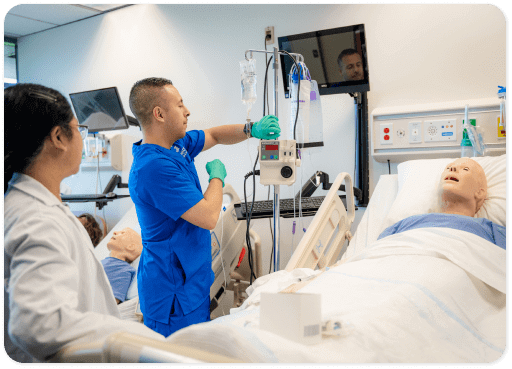
Hands-On Skills Lab Training
Clinical Hours Provided
NCLEX-PN Exam Prep
Job Placement Assistance
*48 Approved Instructional Weeks
Program Mission
Gurnick Academy of Medical Arts and the Vocational Nurse Program faculty are dedicated to providing qualified individuals with an optimal learning experience, equipping them to become competent vocational nursing professionals who demonstrate the highest standards of ethics, professionalism, clinical competency, and critical thinking, while providing compassionate and respectful patient care.
Program Description
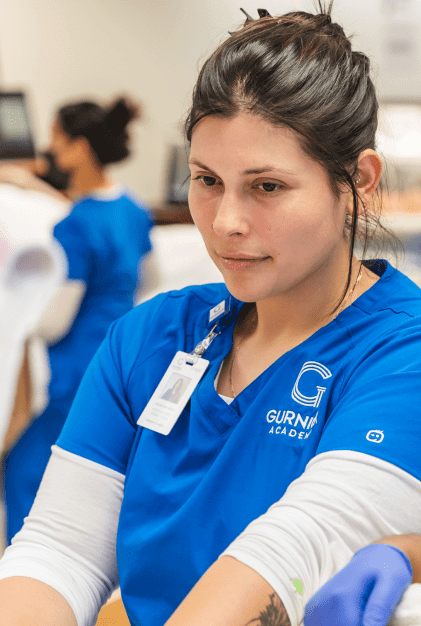
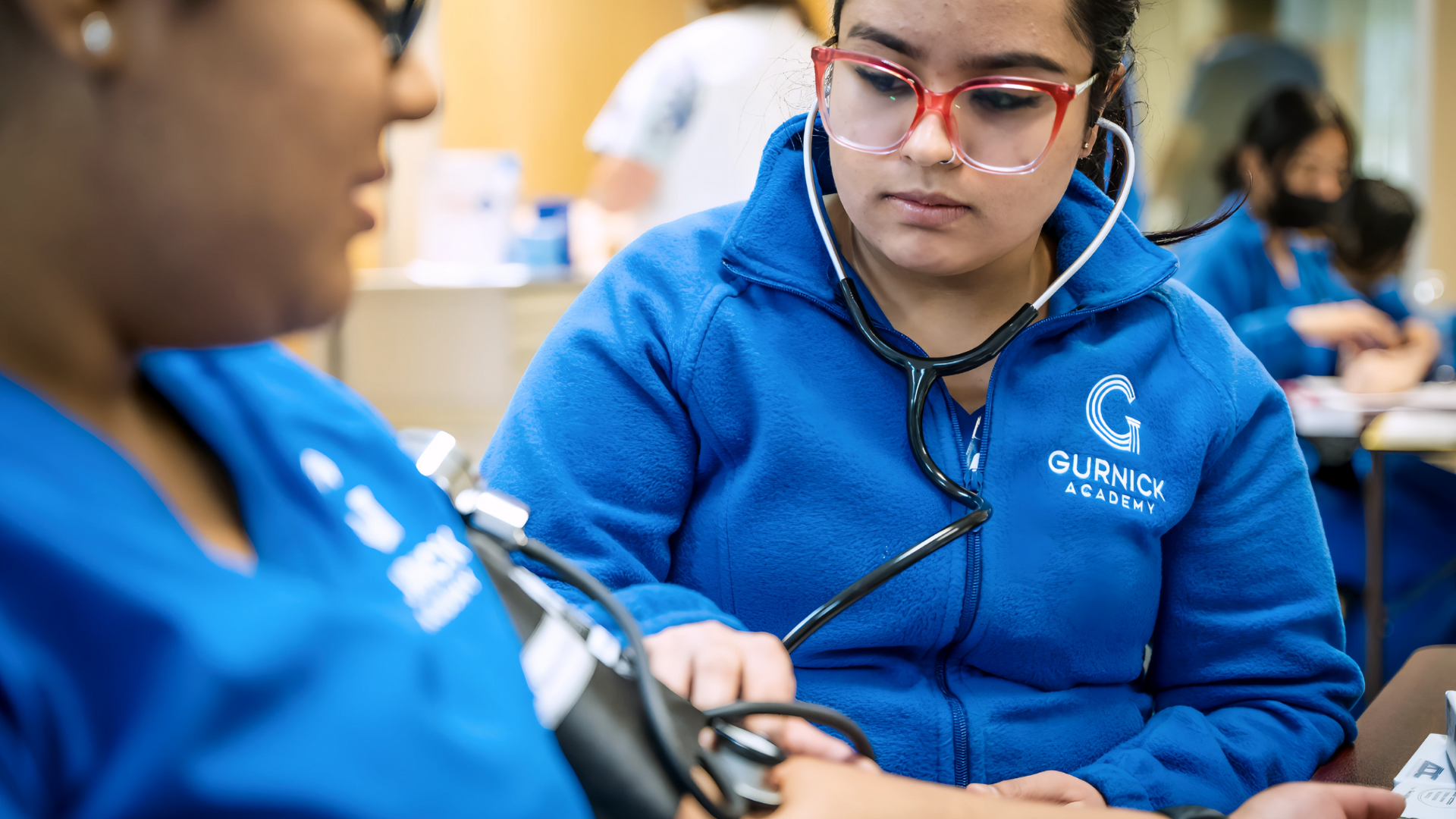
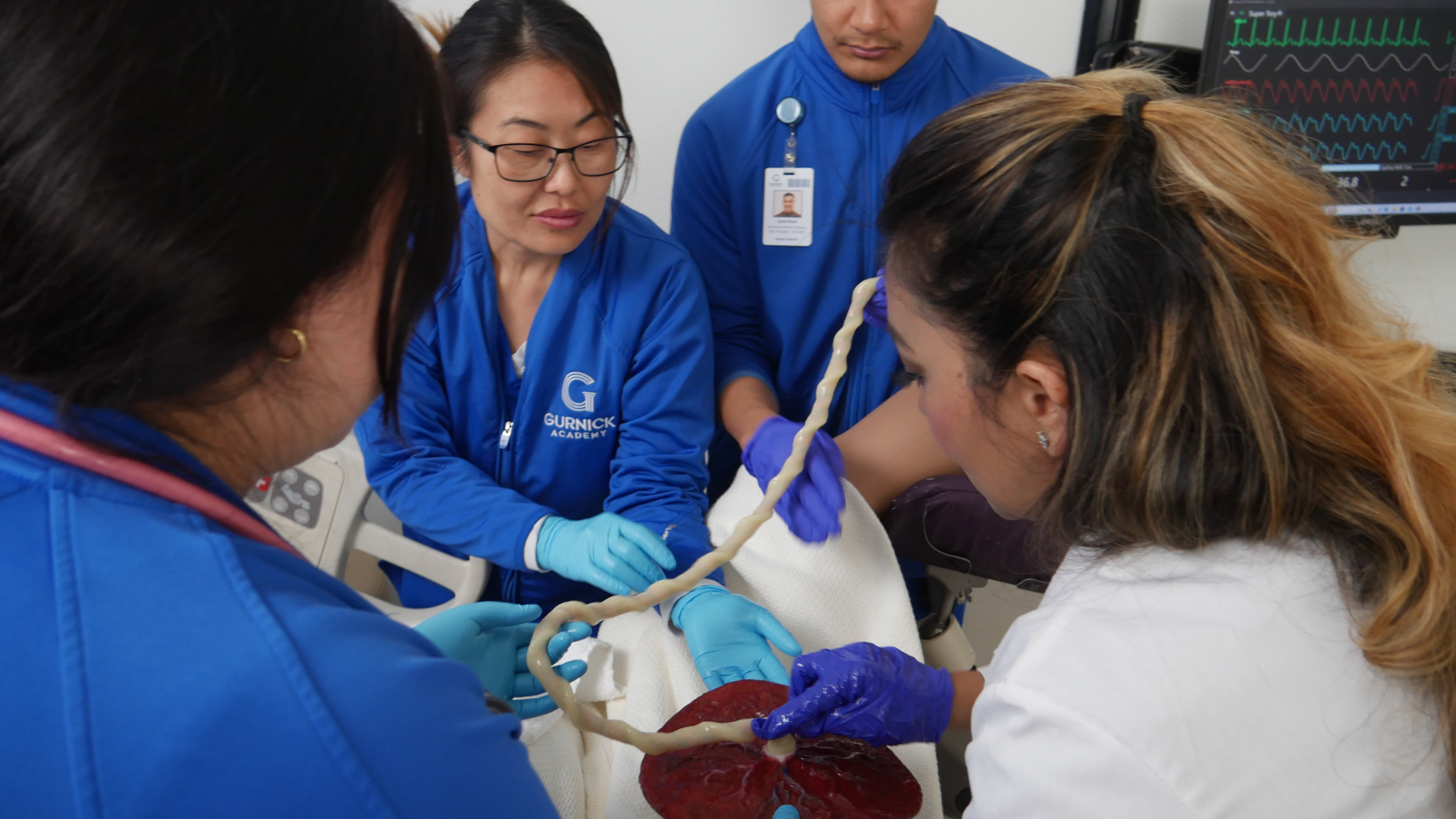
The Vocational Nurse (VN) program utilizes a plan in which nursing courses progress along the simple-complex continuum. The organizing principle is homeostasis, which involves studying representative client problems by addressing the various anatomical systems and specialty areas in nursing. The program comprises academic lectures, laboratory training, and a clinical component that correlates with theoretical knowledge. As a result of preparation, students can work as vocational nurses in hospitals or medical clinics.

Incorporate principles from nursing, behavioral, and physical sciences to provide competent care to clients of different ages with different bio-psychosocial needs.
Apply knowledge of specific disease conditions to prevent, treat, provide nursing care, and facilitate rehabilitation for clients.
Differentiate the role of the Vocational Nurse within the healthcare team.
Adhere to professional standards, incorporating legal and ethical responsibilities of a Vocational Nurse.
Utilize clinical judgment in assessment, planning, intervention, and evaluation of client care within the scope of Vocational Nurse practice.
Organize, prioritize, and delegate care effectively, communicating clearly with members of the healthcare team.
Demonstrate preparedness to take the National Council Licensing Examination for Practical Nurses (NCLEX-PN) and complete the NCLEX-PN within 60 or 90 days upon graduation.
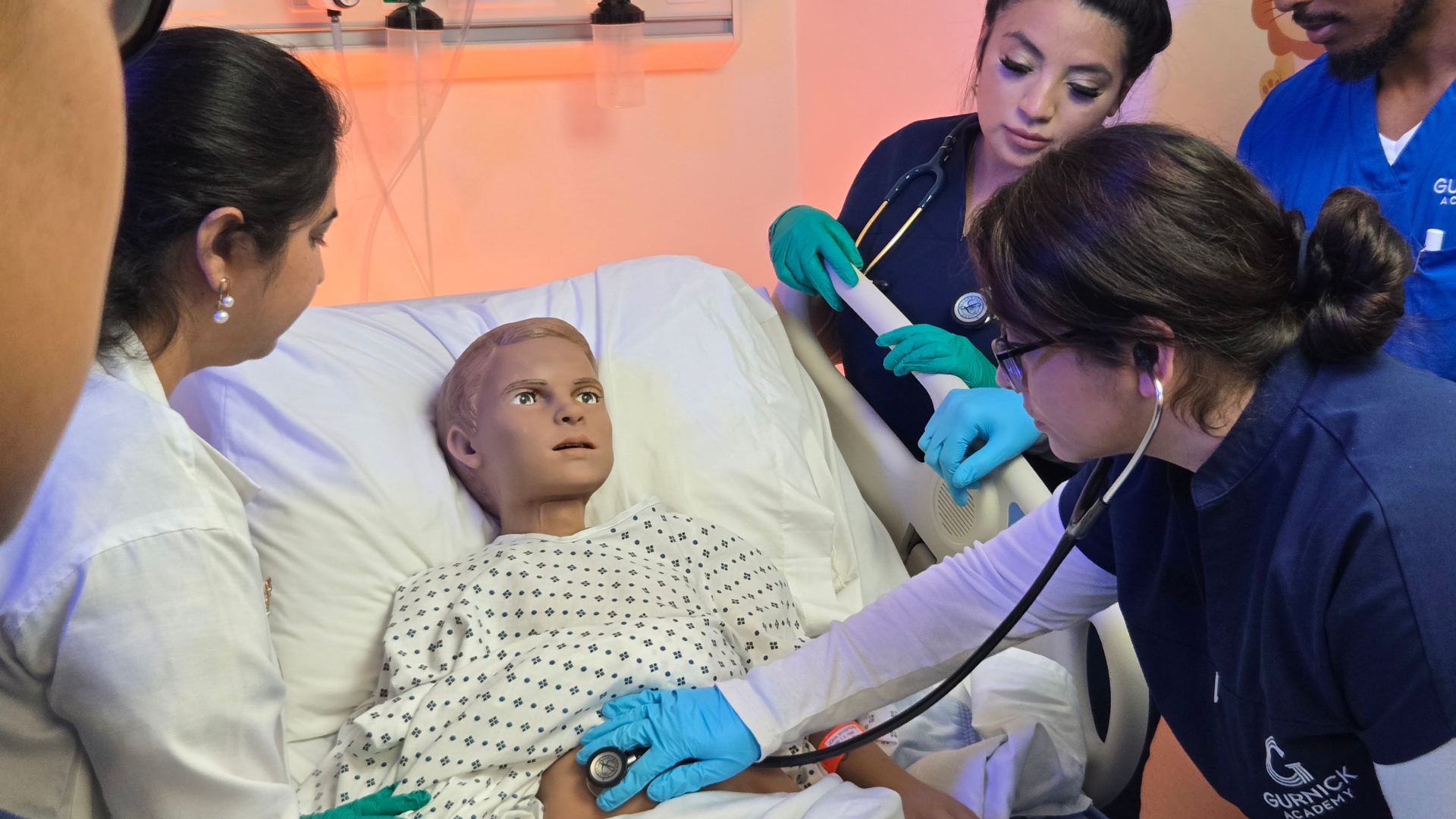
Gurnick Academy of Medical Arts considers clinical experience essential in healthcare education.
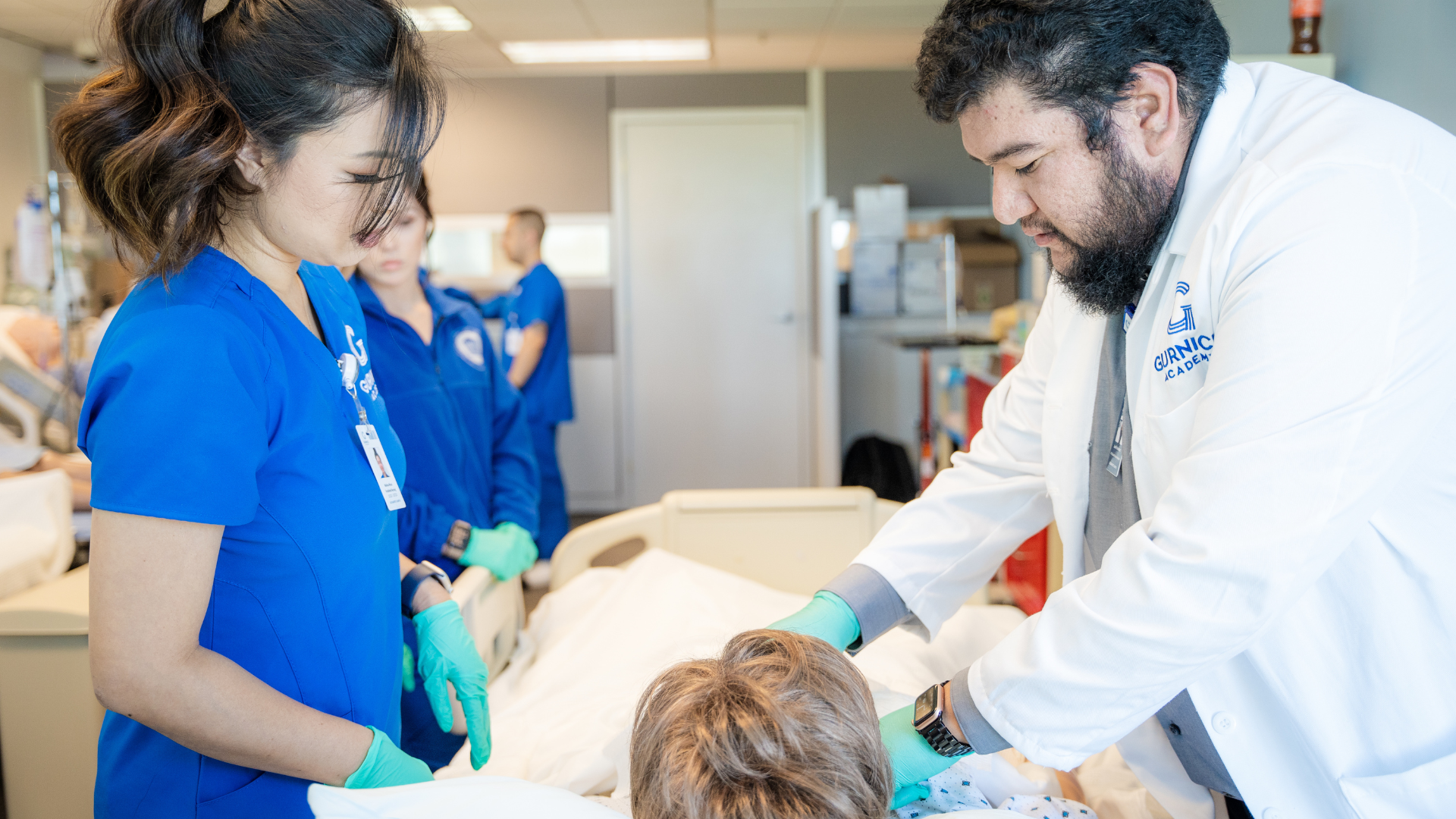
Students must be rotated throughout our affiliated medical facilities while attending our nursing school.
*48 Approved instruction Weeks
The program information, length, and schedule are subject to change. Please review the Catalog and Addendum for updates and changes. Check with an Admission Advisor for details. The Vocational Nurse program is a diploma program.
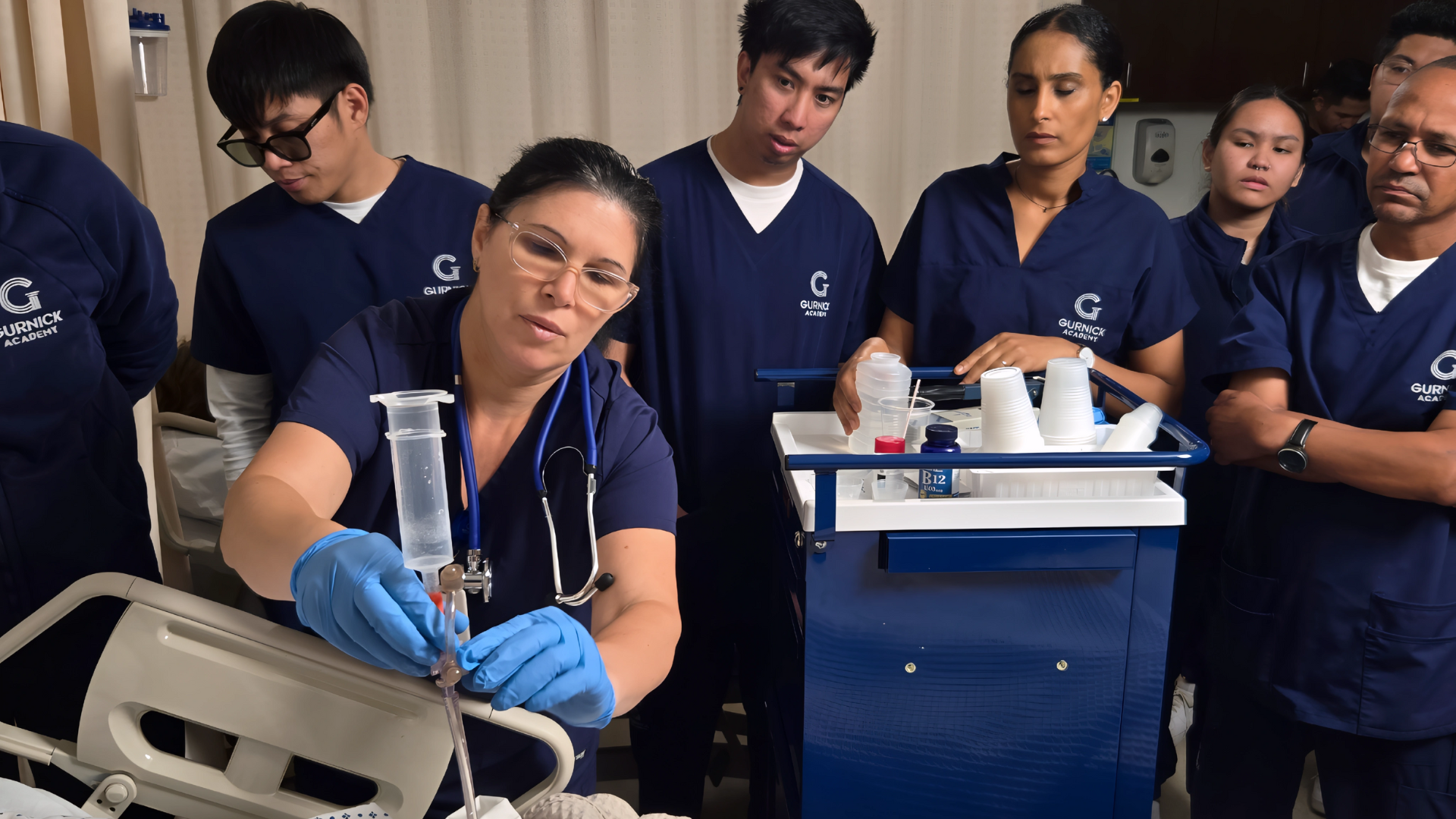
The Vocational Nurse Program is a diploma program that provides a library and classrooms equipped with audiovisual teaching aids, textbooks, journals, anatomical charts, and models. The Instructor-to-Student ratio is 1:15 in the laboratory and clinical externships, 1:30-1:50 during residential lectures, and 1:25 during online lectures.
Classes are enrolled twice a year at the San Jose and Sacramento campuses. Classes begin four times at the Concord, Fresno, and Modesto campuses. Students spend 30 to 40 hours per week attending classes, and the program consists of four (4) modules.
Module One—Monday through Friday
Morning Group students must be available from 9 AM to 2 PM for the lectures/internal clinical experience–four (4) days a week, and 6 AM to 2 PM, or 6:30 AM to 2:30 PM for the clinical skill lab – one (1) day a week, depending on the campus.
Evening Group students must be available from 5 PM to 10 PM for the lectures/internal clinical experience–four (4) days a week and from 2 PM to 10 PM, 2:30 PM to 10:30 PM, or from 3 PM to 11 PM for the clinical lab–one (1) day a week. (Modesto campus is from 2:30 PM to 10:30 PM). The listed times are approximate.
Module Two, Three, and Four—Monday through Friday
Morning Group students must be available from 9 AM to 2 PM for the lectures/internal clinical experience–three (3) days a week. Evening Group students must be available from 5 PM to 10 PM for the lectures/internal clinical experience–three (3) days a week.
Morning and Evening Group students must be available two to five days per week for the clinical rotations. Regular clinical rotations are 6:00 AM to 3:00 PM and 2:30 PM to 11:30 PM. Particular clinical rotations (E.g., OB, Peds) might require an alternative schedule (E.g., 8:00 AM to 6:00 PM, Saturdays). Students must complete the specified rotations according to the provided schedule.
The curriculum equips students with the technical, clinical, and interpersonal skills required to excel in this demanding field. The expected completion time for this program is 48 weeks, excluding holidays and vacation times. Preparation for the NCLEX is provided during the final module of the program. Students are permitted up to two (2) attempts to pass the exit exam for graduation based on the guidelines in VN 450.
The first attempt is given after the program is completed. The second attempt is given two (2) weeks after program completion. Under extraordinary circumstances, applicable Students may be eligible for one (1) additional attempt. See the Student Grievance and Appeals Policy for more information.
Class times can and may be rescheduled on an alternate day of the week (Sunday through Saturday) to ensure on-time program completion and fulfillment of required program hours.
Dates may vary by campus location. Please refer to the Academic Calendar for more details.

Please review the following General Admission Requirements for all programs. Some Campuses (such as those with an applicant pool larger than the number of available seats at the desired campus location) may require an additional step: an interview with the applicable VN Program Coordinator or their designee.
All applicants must meet the following criteria:
Each program has physical and non-physical requirements to ensure our students’ and patients’ safety and welfare. Almost all of our students must be able to do the following: (Check with an Admission Advisor if applicable.)
The following requirements must be met for a student to graduate from the Medical Assistant program at Gurnick Academy of Medical Arts:
Please review the following General Admission Requirements for all programs. Some Campuses (such as those with an applicant pool larger than the number of available seats at the desired campus location) may require an additional step: an interview with the applicable VN Program Coordinator or their designee.
All applicants must meet the following criteria:
Each program has physical and non-physical requirements to ensure our students’ and patients’ safety and welfare. Almost all of our students must be able to do the following: (Check with an Admission Advisor if applicable.)
The following requirements must be met for a student to graduate from the Medical Assistant program at Gurnick Academy of Medical Arts:
Please note that the following table may not apply to all of our campuses. Some campuses may have a non-interview enrollment process. Please ask the Admission Advisor for more details.
| Admissions Point Table | Points Possible |
|---|---|
| CCAT | 3 |
| ➣ Score 16-24 | 1 |
| ➣ Score 25-34 | 2 |
| ➣ Score 35-45 | 3 |
| Resume | 6 |
| Previous Education | 3 |
| ➣ HS Diploma or GED | 1 |
| ➣ Associate Degree | 2 |
| ➣ Bachelor's Degree and Higher | 3 |
| Healthcare Field Experience (per resume) | 3 |
| ➣ One (1) Year | 1 |
| ➣ Two to Four (2-4) Years | 2 |
| ➣ More Than Four (4) Years | 3 |
| Prerequisite Course Grades (Points do not appy if credit granted) | 20 |
| ➣ A | 20 |
| ➣ B | 15 |
| ➣ C | 10 |
| Prerequisite Attendance | 15 |
| ➣ Missed Zero (0) Classes | 15 |
| ➣ Missed One (1) Class | 10 |
| ➣ Missed Two (2) or More Classes | 2 |
| Total Possible Points Available | 50 |
| Course Number | Title | Clock Hours | Quarter Credit Hours |
|---|---|---|---|
| VN 100 | Fundamental of Nursing* | 96.0 | 9.5 |
| VN 110 | Anatomy and Physiology | 56.0 | 5.5 |
| VN 120 | Clinical Nutrition | 32.0 | 3.0 |
| VN 130 | Clinical Lab I* | 120.0 | 6.0 |
| VN 200 | Medical/Surgical Nursing I* | 88.0 | 8.5 |
| VN 220 | Clinical II* | 278.0 | 9.0 |
| VN 230 | Pharmacology | 54.0 | 5.0 |
| VN 300 | Medical/Surgical Nursing II* | 96.0 | 9.5 |
| VN 320 | Clinical III* | 278.0 | 9.0 |
| VN 400 | Obstetric Nursing | 40.0 | 4.0 |
| VN 410 | Pediatric Nursing | 40.0 | 4.0 |
| VN 420 | Psychiatric Nursing | 32.0 | 3.0 |
| VN 430 | Clinical IV | 278.0 | 9.0 |
| VN 450 | Capstone | 42.0 | 4.0 |
| Total | 1,530.0 | 89.0 | |
Learn more about the Licensure, Certification, and Registry Disclaimer in the Catalog and Addendum.
Click here for license examination pass rate information.
State Authorization
Gurnick Academy of Medical Arts provides information on whether its programs meet educational requirements for professional licensure or certification in each state. Students are encouraged to review the Curriculum and Licensure Requirements by State available on the Academy’s website here to determine if a specific program fulfills the requirements in their intended state of residence or employment.
View the O*Net Online 29-2061.00 Licensed Practical and Licensed Vocational Nurses job profile for general information about the profession. Find information about the salary data in California and the major cities near the campus where the program is offered.

Gurnick Academy of Medical Arts holds national institutional accreditation by the Accrediting Bureau of Health Education Schools (ABHES). ABHES accreditation does not include continuing education courses.
ABHES Mailing Address:
6116 Executive Blvd., Suite 730
North Bethesda, MD 20852
ABHES Phone: 301 291-7550
ABHES Email: Info
ABHES Website: abhes.org

Gurnick Academy of Medical Arts is a private institution approved to operate by the California Bureau for Private Postsecondary Education. Approval to operate means the institution is compliant with the minimum standards in the California Private Postsecondary Education Act (CPPEA) of 2009 (as amended) and Division 7.5 of Title 5 of the California Code of Regulations. CPPEA governs the Bureau for Private Postsecondary Education.
The Office of Student Assistance and Relief is available to support prospective students, current students, or past students of private postsecondary educational institutions in making informed decisions, understanding their rights, and navigating available services and relief options. The office may be reached by calling 888-370-7589, option #5, or by visiting osar.bppe.ca.gov.
BPPE Mailing Address:
1747 N. Market Blvd., Suite 225
Sacramento, CA 95834
BPPE Phone: 888-370-7589
BPPE Email: General
BPPE Website: bppe.ca.gov
Gurnick Academy of Medical Arts is approved by the Board of Vocational Nursing and Psychiatric Technicians (BVNPT).
BVNPT Mailing Address:
2535 Capitol Oaks Drive, Suite 205
Sacramento, CA 95833
BVNPT Phone: 916-263-7800
BVNPT Email: General
BVNPT Website: bvnpt.ca.gov

Credits earned from courses or programs accredited by an agency recognized by the United States Department of Education (U.S.DOE) or the Council for Higher Education Accreditation (CHEA):
Gurnick Academy of Medical Arts aims to help every student obtain Financial Aid* to attend their chosen program. Gurnick Academy of Medical Arts participates in various federal and state student financial assistance programs.
The financial aid programs are designed to assist students with inadequate financial resources to meet their education’s total cost. Each campus has a Financial Aid Advisor who can help students with any financial aid questions.
For more information, please visit our Financial Aid page.
*for those who qualify
Sandra Flores
Vocational Nurse Program
My personal experience at Gurnick was a good one. I learned a great deal while attending nursing school. I can honestly say that I built genuine relationships with my instructors and classmates. I can proudly say today that I am officially Nurse Sandy 👩🏻⚕️, A Hospice Nurse.
Caitlin Gifford
Vocational Nurse Program
Nursing is not for everyone. It takes a different way of understanding. It takes empathy, compassion, hard work, tenacity, and, of course, lots of coffee! Gurnick has allowed me to pursue my education, along with the values and responsibilities that it takes to become the best nurse I can be.
Rachael Byrne
Vocational Nurse Program
I have found Gurnick to be a much more personable and resourceful program to be part of. The program is challenging, but students are incredibly well-supported, with access to instructors and resources that enable them to perform at their best.
Please choose from the dropdown to review a category of FAQs
The definition of a Licensed Vocational Nurse (LVN) is an entry-level healthcare provider who is responsible for rendering basic nursing care within a directed scope of practice.1 While performing a limited range of nursing functions, they practice under the direction of a Physician, Registered Nurse, or other advanced healthcare professional.2
They have also passed the NCLEX-PN examination and are licensed by a state board of nursing, which allows them to provide patient care.
Citations
1 “Licensed Vocational Nurse Scope of Practice.” Texas Board of Nursing, Texas.Gov. 2013. (Accessed March 31, 2022.)
2 “Licensed Vocational Nurses.” Board of Vocational Nursing and Psychiatric Technicians (BVNPT). The State of California. 2022. (Accessed March 15, 2022.)
Yes, a Registered Nurse’s role is a higher level of education, pay, and skill than a Licensed Vocational Nurse’s role. Based on geographic and workplace requisites, one may be eligible for a role as a Licensed Vocational Nurse by completing either:
a) Vocational Nurse Diploma program;
<OR>
b) An Associate of Science (A.S) in Vocational Nursing program. At Gurnick Academy, completion is as follows:
<OR>
(See the above bullet.)
Other schools often integrate general educational courses, so students graduate with an ASVN, not just the VN Diploma. Gurnick Academy students complete the diploma program before applying to the AS in Vocational Nursing program. Vocational Nursing students from either program must pass the NCLEX-PN.
On the other hand, a Registered Nurse (RN) is someone who has completed a higher level of education and passed the NCLEX-RN.
To be considered a Registered Nurse, one must complete either an associate’s or a bachelor’s degree in nursing. Associate degree programs may include the following:
Bachelor’s degree programs may consist of the following:
Within the U.S., Licensed Vocational Nurses are referred to as Licensed Practical Nurses, except in two regions.1 In California and Texas, these same professionals are termed Licensed Vocational Nurses. Generally speaking, titles denote the same positions within nursing in terms of rank, staff, education, pay, and scope.
Citation
1 Admin. “Difference Between LPN and LVN.” Compare the Differences Between Similar Terms. 2011. (Accessed March 31, 2022.)
Usually, these titles are used interchangeably by laypersons and patients for general understanding, then applied as reference points among similar roles. Titles differ between geographic locations, such as the titles used for nurses in England versus those in New York, with slight variations in duties and responsibilities.
According to O*NET, Licensed Vocational Nurses use other terms, including:
Within the U.S., state regulations govern the use of titles, and one term may not be automatically transferable from one state to another.
Citation
1 “29-2061.00-Licensed Practical and Licensed Vocational Nurses.” O*NET Online, National Center for O*NET Development. (Accessed February 28, 2022.)
The question isn’t whether something is simple or complex. The length, training, and scope of professional practice for a Licensed Vocational Nursing route represent time and educational commitment. The program requires a commitment to the profession.
You must be at least 17 years of age to be admitted to the Essential Medical Bioscience prerequisites course, provided you have obtained consent from a parent or guardian. Applicants must be at least 18 years of age at the beginning of the core program.
You can fill out our online contact form to have information mailed to you, or a school representative can contact you.
Learn more about admission requirements.
Please find more information about the process for evaluating foreign transcripts and diplomas.
Please click on the link for more info about the CCAT exam.
To qualify for the Vocational Nurse program, you must pass the CCAT exam.
Please click on the link for more info about the CCAT exam.
Regardless of degree or background, all applicants must pass the entrance exam to be admitted into the program.
Click on the link to learn more about the prerequisite courses for the VN program.
Our prerequisite courses are offered before each program start date, usually twice per year.
It is approximately ten (10) weeks or 80-course hours.
Prerequisites are separate from the program and are not included in the program length.
Click on the link to learn more about our VN program accreditation.
We offer flexible payment options and private student loan options.
Learn more about program length and schedule.
Learn more about our program length and schedule.
Please find more info in the Catalog and Addendum.
View the Addendum to review all scheduled breaks during the school year.
Review the Catalog and Addendum for information about limitations to acceptance into the Vocational Nurse program.
The Board of Vocational Nursing and Psychiatric Technicians (BVNPT) requires a background check for licensure in the state. If your criminal history involves violent, substance abuse, and sexually violent crimes, clinical facilities may deny your participation.
The program is considered a full-time program, even though students are not required to be on campus full-time.
Students cannot switch back and forth between day and evening classes. Students can enroll only in the day schedule or night schedule (not both).
However, special circumstances may be accommodated at the discretion of the instructor or program director.
With careful time management, many students have successfully maintained part-time employment while completing the program.
Licensed Practical and Licensed Vocational Nurses work in many settings, including nursing homes, extended care facilities, hospitals, physicians’ offices, and private homes. Most work full-time.1
Citation
1 Bureau of Labor Statistics, U.S. Department of Labor, Occupational Outlook Handbook, Licensed Practical and Licensed Vocational Nurses. (Accessed April 26, 2022.)
Learn more about our program length and schedule.
An externship will be provided for all of our students.
Your externship will be provided through our affiliated clinical facilities. These facilities include hospitals, outpatient imaging centers, and private doctors’ offices. It is the student’s responsibility to commute to the various externship sites. The list of clinics is constantly evolving.
Learn more about our program length and schedule.
All externships are unpaid.
All students will be continually evaluated by the program director/clinical coordinator and the student’s clinical instructor. These evaluations will take place at the externship site(s). All students will be notified in advance of their upcoming evaluations.
One may take the Licensed Vocational Nursing route as a bridge to a Registered Nursing career, or they may choose to stop at the LVN level. Some students stop, work, and then later enter an RN route. Other students never become LVNs but instead follow a direct pathway to becoming RNs.
While there are various options for the profession, nursing education is seldom overlooked by any student. It can often be applied in multiple ways, at various times, and in diverse settings.
To view the fee breakdown, please see our program fees section.
Prerequisites are billed separately from the program and are not included in the program cost.
Click on the link for more info about program fees.
Financial aid is available for those who qualify. Gurnick Academy of Medical Arts participates in various federal and state student financial assistance programs.
Contact the Financial Aid Department if you have questions about Sallie Mae loans.
The Vocational Nurse Program is a diploma program.
Yes, we assist with job placements for all students who complete the program. However, we cannot guarantee employment.
NCLEX test preparation is strongly emphasized throughout our students’ entire curriculum at Gurnick Academy of Medical Arts. We also offer NCLEX preparation classes near the program’s end and conduct reviews, as well as optional NCLEX preparation courses.
Yes. However, Licensed Vocational Nurses are limited in scope and practice and must be supervised by a physician, Registered Nurse, or an Advanced Practice Registered Nurse (APRN).1
Citation
1 “Nursing Licensure and Scope of Practice in California.” Nursing Explorer. (Accessed April 25, 2022.)
According to U.S. News and World Report, Licensed Vocational Nurses received an overall score of 6.3 out of ten in job satisfaction. LVNs ranked #4 in Best Jobs Without a College Degree, #5 in Best Health Care Support Jobs, and #20 in Highest Paying Jobs Without a Degree.
Ratings are determined by their ability to offer an elusive mix of factors, including stress, education, flexibility, work-life balance, and other relevant considerations.1
Citation
1 “Licensed Practical and Licensed Vocational Nurse Overview.” U.S. News and World Report, L.P. 2022. (Accessed April 26, 2022.)
According to U.S. News and World Report, Licensed Vocational Nurses made a median salary of $48,820 in 2020. The best-paid 25 percent earned $57,860 yearly, while the lowest-paid 25 percent made $42,060.1 In California, Licensed Vocational Nurses have a mean annual salary of $64,090.1
Citation
1 “Licensed Practical and Licensed Vocational Nurse Overview.” U.S. News and World Report, L.P. 2022. (Accessed April 26, 2022.)
Beyond helping, caring for, and serving others, many Licensed Vocational Nurses report general satisfaction with their profession. According to U.S. News and World Report, LPNs/LVNs receive a score of 6.3 out of ten in overall satisfaction and rank #4 in Best Jobs Without a College Degree and #5 in Best Health Care Support Jobs. They also rank #20 in Highest Paying Jobs Without a Degree. Jobs are evaluated based on their ability to offer a unique blend of factors, including stress, education, flexibility, work-life balance, and other key considerations.1
Citation
1 “Licensed Practical and Licensed Vocational Nurse Overview.” U.S. News and World Report, L.P. 2022. (Accessed April 26, 2022.)
According to the online resource, Minority Nurse, poor management and the lack of support from their management teams are among the most significant complaints nurses report.
What makes a poor manager? Nurses may say it is a manager who doesn’t value open communication and feedback from their staff.1 Another chief complaint within the profession seems to be burnout. Most often, burnout is due to staffing shortages. 1
Citation
1^a, b Johnson, Nachole. “Why Good Nurses Leave the Profession.” Minority Nurse, Springer Publishing Company. December 13, 2018. (Accessed April 26, 2022.)
According to the U.S. Bureau of Labor Statistics, employment of Licensed Practical and Licensed Vocational Nurses is projected to grow by nine percent from 2020 to 2030, about as fast as the average for all occupations.1
Citation
1 Bureau of Labor Statistics, U.S. Department of Labor, Occupational Outlook Handbook, Licensed Practical and Licensed Vocational Nurses. (Accessed April 26, 2022.)
According to Indeed.com, the most commonly asked interview questions for Licensed Vocational Nurses include the following:
Citation
1 Indeed Editorial Team. “31 Interview Questions for LPNs and Example Answers.” Indeed Career Guide. June 23, 2021. (Accessed April 26, 2022.)
According to O*NET, some of the tools Licensed Vocational Nurses use include the following items.
Citation
1 “29-2061.00–Licensed Practical and Licensed Vocational Nurses.” O*NET OnLine, National Center for O*NET Development. (Accessed February 28, 2022.)
Licensed Vocational Nurses observe patients, perform basic assessments, and report and document changes in patient conditions. They also measure vital signs, perform medical treatments, and administer physician-prescribed medications.1 LVNs must be supervised by physicians, Registered Nurses, or APRNs.2
Citations
1 Detailed Guide for Licensed Practical and Licensed Vocational Nurses in Fresno County. Employment Development Department. The State of California. 2022. (Accessed April 25, 2022.)
2 “Nursing Licensure and Scope of Practice in California.” Nursing Explorer. (Accessed June 9, 2022.)
Yes, in California, a Licensed Vocational Nurse may withdraw blood.1 An LVN may administer fluids, medication, Total Parenteral Nutrition (TPN), blood, or blood products via central venous catheters and central lines. They may access these lines for blood draws and the administration of emergency cardiac medications via IV push if the following conditions are met: The LVN/LPN holds a current ACLS certification.2, 3
Citations
1 “Nursing Licensure and Scope of Practice in California.” Nursing Explorer. (Accessed April 25, 2022.)
2 “Can an LVN Draw Blood in California?” SeniorCare2Share. December 17, 2021. (Accessed April 25, 2022.)
3 “Frequently Asked Questions.” Board of Vocational Nursing and Psychiatric Technicians (BVNPT). The State of California. 2022. (Accessed April 26, 2022.)
The BVNPT Board will consider a Licensed Vocational Nurse as competent to start and superimpose intravenous fluids via primary or secondary infusion lines who have completed one of the following:
(a) A course in intravenous therapy approved by the Board.
(b) Submitted certification, satisfactory to the Board, by one of the persons specified that the licensee has been instructed in the subject areas specified and that the licensee has the knowledge, skills, and abilities to practice venipuncture safely.1
Citation
1 “Intravenous Therapy.” Board of Vocational Nursing and Psychiatric Technicians (BVNPT). The State of California. 2022. (Accessed April 26, 2022.)
Every institution has its own unique policies, procedures, rules, and regulations. Furthermore, states vary in the scopes of practice for Licensed Vocational Nurses. Generally, an LVN may give oral pain medication and insulin injections as prescribed by physicians. LVNs can often provide oral chemotherapy drugs, watching closely for side effects after the medication has been given.1
Citation
1 “Can LPNs Administer Medication?” Practical Nursing.org. 2022. (Accessed April 26, 2022.)
Yes, in California, a Licensed Vocational Nurse may administer medications, including injections and immunizations, and perform skin tests. LVNs who have completed IV therapy training may also start, manage, and discontinue intravenous lines.1
An LVN may administer fluids, medication, Total Parenteral Nutrition (TPN), blood, or blood products via central venous catheters and central lines. They may access these lines for blood draws and administration of emergency cardiac medications via IV push if they have current ACLS certification.2 However, they may not prescribe these procedures.
Citations
1 “Nursing Licensure and Scope of Practice in California.” Nursing Explorer. (Accessed April 25, 2022.)
2 “Can an LVN Draw Blood in California?” SeniorCare2Share. December 17, 2021. (Accessed April 25, 2022.)
The Board of Nursing in each state defines what level of care Licensed Vocational Nurses can and can’t provide through an official document called their “scope of practice.”1
Citation
1 “Frequently Asked Questions.” Board of Vocational Nursing and Psychiatric Technicians (BVNPT). The State of California. 2022. (Accessed April 26, 2022.)
"*" indicates required fields
If you are a person who is deaf, hard of hearing, or speech-disabled, please Dial 711 to place a call through California Relay.